
Skip to content
CYBER ETHOSAZAD SLEIGHER
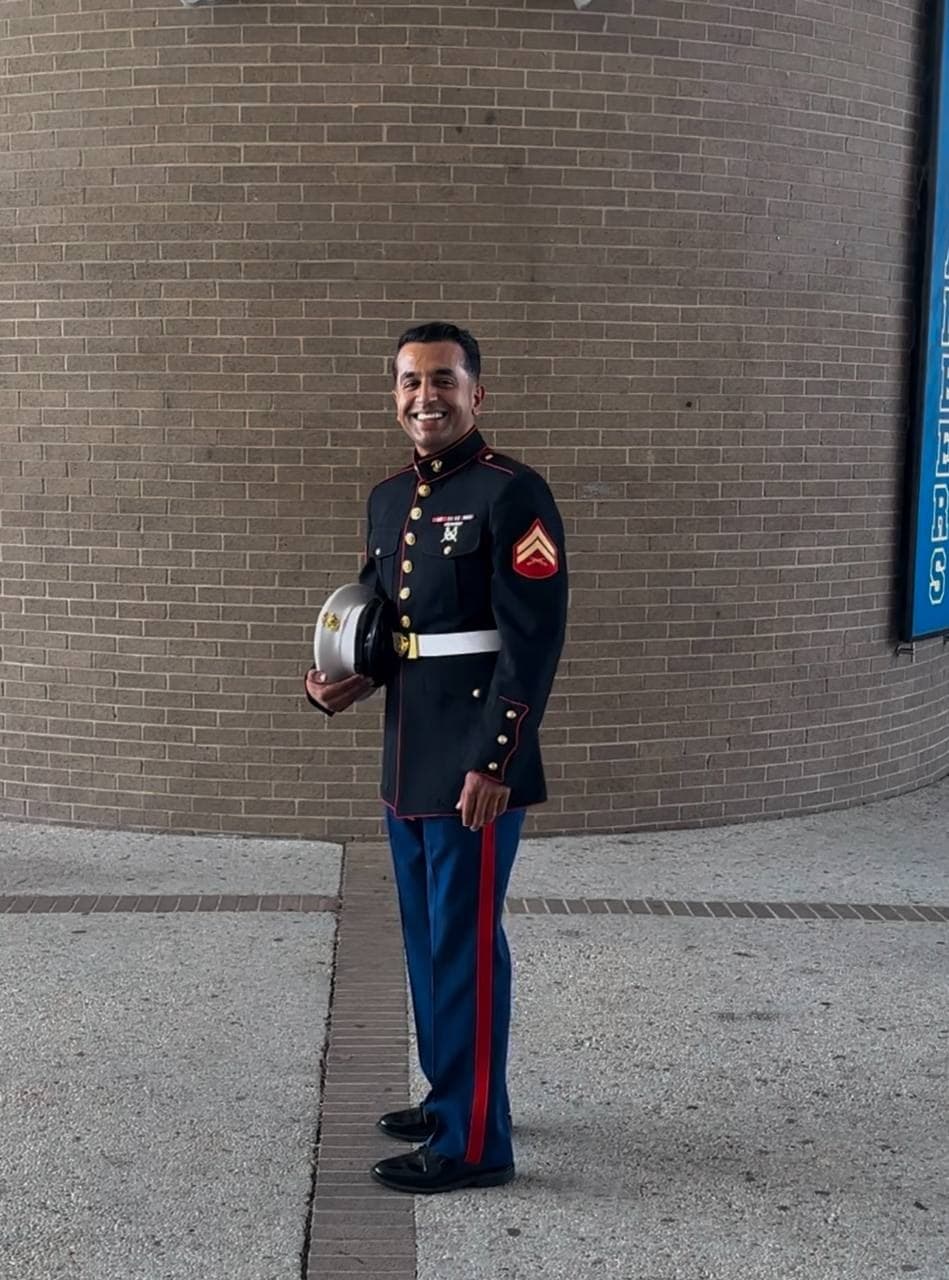
Azad Sleigher in Marine Corps dress uniform

Discipline. Curiosity. Purpose.

A life of service.
A new front line.

Marine veteran. Former Special Operations interpreter in Iraq. Now a cybersecurity student doing the same work in different terrain: finding what is exposed before someone else does.

01 / The usual gaps

Does this sound like your shop?

Most organizations are not breached by something exotic. They are breached through an account nobody closed, a plugin nobody updated, a process everybody assumed someone else owned.

  • An account is still open for someone who left, and nobody can say who owns it.
  • A plugin or vendor still runs because it has not broken yet.
  • A process everybody assumed someone else owned.
  • You cannot say, plainly, what is exposed and what is fine.
Azad Sleigher in Marine Corps dress uniform
Azad SleigherFounder / Cyber Ethos

02 / The advisor

You do not need another vendor.
You need an honest picture.

I spent years as a Marine, and before that as a Special Operations interpreter in Iraq. The job was to understand the ground, understand the people on it, and give the team an honest picture, including the parts nobody wanted to hear.

Independent practice. Written scope first. Authorization before any testing.

Azad SleigherFounder, Cyber Ethos

03 / The work

Three ways I can help

Most engagements start with an audit and go from there. If you already know what you are worried about, say so and we will scope only that.

Laptop and phone on a desk during everyday account work

01

Cybersecurity Audit

A full read on where your organization actually stands.

I review your accounts, devices, access rules and day-to-day habits, then tell you plainly what is exposed and what is fine. No scare tactics, no 80-page report nobody opens.

Scope this engagement
  • Access and account review
  • Device and network posture
  • Written findings, ranked by risk
Circuit board layout used as a plate for technical terrain

02

Penetration Testing

Controlled, authorized attempts to get in before someone uninvited tries.

Scope is agreed in writing first. I work the way an attacker would, document every step, and show you exactly which door opened and why it opened.

Scope this engagement
  • Agreed scope and rules of engagement
  • Reproducible attack paths
  • Fix guidance your team can action
Notes and laptops during a scoped briefing

03

Website Vulnerability Detection

For the site your customers, patients or clients trust with their data.

Forms, logins, payments, plugins and configuration get checked for the flaws that are actually used in the wild. You get a short list of what to fix, in order.

Scope this engagement
  • Form, login and payment path testing
  • Dependency and configuration checks
  • Prioritized remediation list

Testing only with explicit authorization and agreed scope. No credentials or sensitive data in your first message.

Service plates are Unsplash photographs, used as work scenes, not as a stand-in for the founder.

04 / The method

How an engagement actually runs

  1. 01

    Define the scope

    We agree on what is in bounds, what is off limits, and what a good outcome looks like. Everything is in writing before any testing begins.

  2. 02

    Validate the findings

    Nothing goes in a report until I can reproduce it. You will not get a list of maybes generated by a scanner. You get confirmed issues with evidence.

  3. 03

    Make the next move clear

    Findings are ranked by real risk to your operation, with the fix spelled out in language your team can act on this week.

05 / The conversation

What needs a closer look?

Start with a conversation. Tell me what you run and what keeps you up at night. I will tell you honestly whether you need a review, a test, or nothing at all right now.